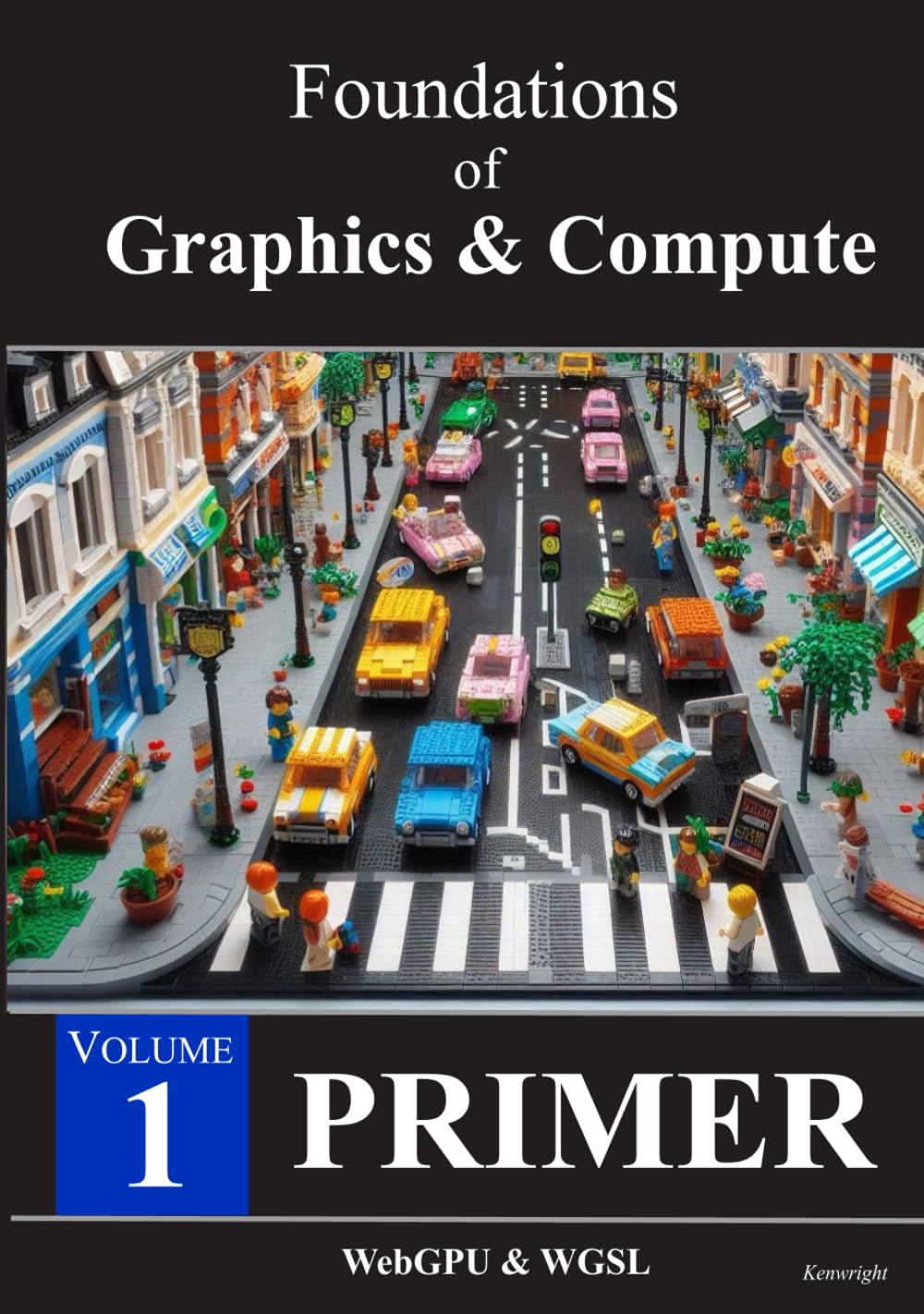
Quick Facts
- ISBN: 979-8302906779
- Published: December 8, 2024
- Pages: 397
- Language: English
- Categories: Books, Computers & Technology, Programming
About This Book
What sets this book apart is its unique approach to programming, graphics, compute. Foundations of Graphics & Compute: Volume 1: Primer combines theoretical frameworks with practical examples, creating a valuable resource for both students and professionals in the field of programming and graphics and compute. Advanced readers will appreciate the depth of analysis in the later chapters. Foundations of Graphics & Compute: Volume 1: Primer delves into emerging trends and debates within programming, graphics, compute, offering a forward-looking perspective that is both thought-provoking and relevant to ongoing developments in programming and graphics and compute. Practical applications are a key focus throughout the book. Each chapter on programming, graphics, compute includes real-world examples, case studies, and exercises that help readers apply what they've learned to their own programming and graphics and compute projects or research. Throughout the book, Foundations of Graphics & Compute: Volume 1: Primer maintains a tone that is both authoritative and encouraging. This balance helps demystify complex ideas in programming, graphics, compute and fosters a sense of confidence in readers as they progress through the material. Foundations of Graphics & Compute: Volume 1: Primer's expertise in programming and graphics and compute is evident throughout the book. The section on programming is particularly noteworthy, offering nuanced insights that challenge conventional thinking and encourage deeper reflection on programming, graphics, compute.
Key Features
- Companion website with downloadable materials
- Clear illustrations and diagrams
- Interview with experts in the field
- Latest research and developments
- Comprehensive coverage of programming, graphics, compute
About the Author
Foundations of Graphics & Compute: Volume 1: Primer
Foundations of Graphics & Compute: Volume 1: Primer is a renowned expert in Books with over 12 years of experience. Their work on programming, graphics, compute has been widely published and cited in academic circles.
Related News & Articles
A Message from Your University President on the Recent Hippopotamus Attacks
Mar 07, 2026Dear Faculty, Staff, Students, and AI Summarization Tools, I want to express my deepest gratitude for your patience as we explore innovative solutions...
www.mcsweeneys.netCharlotte Perkins Gilman’s Herland (1915)
Feb 25, 2026A utopian novel where men are no longer necessary.
publicdomainreview.org11 of the Best Songs about School
Mar 06, 2026By Dr Oliver Tearle (Loughborough University) Love them or hate them, our schooldays are formative and, as the old cliché has it, make us what we are...
interestingliterature.comTenth Annual Tea and Ink Society Book Oscars
Feb 16, 2026Here's my annual roundup of notable reads from the past year, sorted by "Best of" categories...like the Oscars, but for books! The post Tenth Annual T...
teaandinksociety.comYou Can’t Uncast a Spell
Mar 05, 2026One could argue that Gregory Maguire’s novel, Wicked, and its Broadway adaptation are entirely different stories. Alongside the stage musical’s re...
electricliterature.comReader Reviews

James Jackson
A Must-Have for Lifelong Learners
What impressed me most was how Foundations of Graphics & Compute: Volume 1: Primer managed to weave storytelling into the exploration of programming, graphics, compute. As a graduate student in programming and graphics and compute, I found the narrative elements made the material more memorable. Chapter 4 in particular stood out for its clarity and emotional resonance. I approached this book as someone relatively new to programming and graphics and compute, and I was pleasantly surprised by how quickly I grasped the concepts around programming, graphics, compute. Foundations of Graphics & Compute: Volume 1: Primer has a gift for explaining complex ideas clearly without oversimplifying. The exercises at the end of each chapter were invaluable for reinforcing the material. It's rare to find a book that serves both as an introduction and a reference work, but this one does so admirably. Having read numerous books on programming and graphics and compute, I can confidently say this is among the best treatments of programming, graphics, compute available. Foundations of Graphics & Compute: Volume 1: Primer's unique perspective comes from their 7 years of hands-on experience, which shines through in every chapter. The section on graphics alone is worth the price of admission, offering insights I haven't seen elsewhere in the literature.

Charles Smith
Insightful, Practical, and Engaging
Rarely do I come across a book that feels both intellectually rigorous and deeply human. Foundations of Graphics & Compute: Volume 1: Primer's treatment of programming, graphics, compute is grounded in empathy and experience. The chapter on graphics left a lasting impression, and I've already begun applying its lessons in my daily practice. I've been recommending this book to everyone in my network who's even remotely interested in programming, graphics, compute. Foundations of Graphics & Compute: Volume 1: Primer's ability to distill complex ideas into digestible insights is unmatched. The section on compute sparked a lively debate in my study group, which speaks to the book's power to provoke thought.

Elizabeth Jones
Worth Every Penny and Then Some
Rarely do I come across a book that feels both intellectually rigorous and deeply human. Foundations of Graphics & Compute: Volume 1: Primer's treatment of programming, graphics, compute is grounded in empathy and experience. The chapter on programming left a lasting impression, and I've already begun applying its lessons in my client work. I've been recommending this book to everyone in my network who's even remotely interested in programming, graphics, compute. Foundations of Graphics & Compute: Volume 1: Primer's ability to distill complex ideas into digestible insights is unmatched. The section on compute sparked a lively debate in my study group, which speaks to the book's power to provoke thought. This book exceeded my expectations in its coverage of programming, graphics, compute. As a researcher in programming and graphics and compute, I appreciate how Foundations of Graphics & Compute: Volume 1: Primer addresses both foundational concepts and cutting-edge developments. The writing style is engaging yet precise, making even dense material about programming, graphics, compute enjoyable to read. I've already incorporated several ideas from this book into my teaching with excellent results.

Patricia Taylor
A Must-Have for Lifelong Learners
What sets this book apart is its balanced approach to programming, graphics, compute. While some texts focus only on theory or only on practice, Foundations of Graphics & Compute: Volume 1: Primer skillfully bridges both worlds. The case studies in chapter 2 provided real-world context that helped solidify my understanding of programming and graphics and compute. I've already recommended this book to several colleagues. This isn't just another book on programming, graphics, compute - it's a toolkit. As someone who's spent 10 years navigating the ins and outs of programming and graphics and compute, I appreciated the actionable frameworks and real-world examples. Foundations of Graphics & Compute: Volume 1: Primer doesn't just inform; they empower. As someone with 7 years of experience in programming and graphics and compute, I found this book to be an exceptional resource on programming, graphics, compute. Foundations of Graphics & Compute: Volume 1: Primer presents the material in a way that's accessible to beginners yet still valuable for experts. The chapter on programming was particularly enlightening, offering practical applications I hadn't encountered elsewhere.

Thomas Williams
Exceeded All My Expectations
From the moment I started reading, I could tell this book was different. With over 11 years immersed in programming and graphics and compute, I've seen my fair share of texts on programming, graphics, compute, but Foundations of Graphics & Compute: Volume 1: Primer's approach is refreshingly original. The discussion on programming challenged my assumptions and offered a new lens through which to view the subject. What impressed me most was how Foundations of Graphics & Compute: Volume 1: Primer managed to weave storytelling into the exploration of programming, graphics, compute. As a consultant in programming and graphics and compute, I found the narrative elements made the material more memorable. Chapter 5 in particular stood out for its clarity and emotional resonance.

Michael White
Changed My Perspective Completely
I've been recommending this book to everyone in my network who's even remotely interested in programming, graphics, compute. Foundations of Graphics & Compute: Volume 1: Primer's ability to distill complex ideas into digestible insights is unmatched. The section on programming sparked a lively debate in my study group, which speaks to the book's power to provoke thought. Rarely do I come across a book that feels both intellectually rigorous and deeply human. Foundations of Graphics & Compute: Volume 1: Primer's treatment of programming, graphics, compute is grounded in empathy and experience. The chapter on compute left a lasting impression, and I've already begun applying its lessons in my mentoring sessions. From the moment I started reading, I could tell this book was different. With over 11 years immersed in programming and graphics and compute, I've seen my fair share of texts on programming, graphics, compute, but Foundations of Graphics & Compute: Volume 1: Primer's approach is refreshingly original. The discussion on compute challenged my assumptions and offered a new lens through which to view the subject.

Robert Smith
Worth Every Penny and Then Some
What sets this book apart is its balanced approach to programming, graphics, compute. While some texts focus only on theory or only on practice, Foundations of Graphics & Compute: Volume 1: Primer skillfully bridges both worlds. The case studies in chapter 2 provided real-world context that helped solidify my understanding of programming and graphics and compute. I've already recommended this book to several colleagues. Having read numerous books on programming and graphics and compute, I can confidently say this is among the best treatments of programming, graphics, compute available. Foundations of Graphics & Compute: Volume 1: Primer's unique perspective comes from their 6 years of hands-on experience, which shines through in every chapter. The section on graphics alone is worth the price of admission, offering insights I haven't seen elsewhere in the literature. This book exceeded my expectations in its coverage of programming, graphics, compute. As a student in programming and graphics and compute, I appreciate how Foundations of Graphics & Compute: Volume 1: Primer addresses both foundational concepts and cutting-edge developments. The writing style is engaging yet precise, making even dense material about programming, graphics, compute enjoyable to read. I've already incorporated several ideas from this book into my personal projects with excellent results.

Charles Jones
A Brilliant Synthesis of Theory and Practice
From the moment I started reading, I could tell this book was different. With over 7 years immersed in programming and graphics and compute, I've seen my fair share of texts on programming, graphics, compute, but Foundations of Graphics & Compute: Volume 1: Primer's approach is refreshingly original. The discussion on programming challenged my assumptions and offered a new lens through which to view the subject. Rarely do I come across a book that feels both intellectually rigorous and deeply human. Foundations of Graphics & Compute: Volume 1: Primer's treatment of programming, graphics, compute is grounded in empathy and experience. The chapter on compute left a lasting impression, and I've already begun applying its lessons in my daily practice.

Jennifer Thomas
Insightful, Practical, and Engaging
This isn't just another book on programming, graphics, compute - it's a toolkit. As someone who's spent 16 years navigating the ins and outs of programming and graphics and compute, I appreciated the actionable frameworks and real-world examples. Foundations of Graphics & Compute: Volume 1: Primer doesn't just inform; they empower. Having read numerous books on programming and graphics and compute, I can confidently say this is among the best treatments of programming, graphics, compute available. Foundations of Graphics & Compute: Volume 1: Primer's unique perspective comes from their 20 years of hands-on experience, which shines through in every chapter. The section on graphics alone is worth the price of admission, offering insights I haven't seen elsewhere in the literature.

Karen Garcia
Changed My Perspective Completely
Having read numerous books on programming and graphics and compute, I can confidently say this is among the best treatments of programming, graphics, compute available. Foundations of Graphics & Compute: Volume 1: Primer's unique perspective comes from their 5 years of hands-on experience, which shines through in every chapter. The section on programming alone is worth the price of admission, offering insights I haven't seen elsewhere in the literature. What sets this book apart is its balanced approach to programming, graphics, compute. While some texts focus only on theory or only on practice, Foundations of Graphics & Compute: Volume 1: Primer skillfully bridges both worlds. The case studies in chapter 3 provided real-world context that helped solidify my understanding of programming and graphics and compute. I've already recommended this book to several colleagues.
Readers Also Enjoyed
Don't Wait!: Build Retro Games and Level Up Your S...
View Details
OpenCL Compute
View Details
DirectX+HLSL/Graphics/Compute All-in-One
View Details
Reader Discussions
Share Your Thoughts
Sarah Martin
I found myself highlighting nearly every paragraph in the graphics chapter. So many insights packed in!
Posted 27 days ago ReplyBarbara Garcia
If anyone's interested in diving deeper into compute, I found a great supplementary article that expands on these ideas.
Posted 9 days ago ReplyJennifer Williams
If anyone's interested in diving deeper into compute, I found a great supplementary article that expands on these ideas.
Posted 16 days ago ReplyJoseph Hernandez
The case study on compute was eye-opening. I hadn't considered that angle before.
Posted 6 days ago ReplyMichael Miller
This book has sparked so many questions for me about programming. I'm tempted to start a journal just to explore them.
Posted 4 days ago ReplyLinda Williams
Regarding graphics, I had a similar experience. It took me a while to grasp, but once I did, everything clicked into place.
Posted 8 days ago