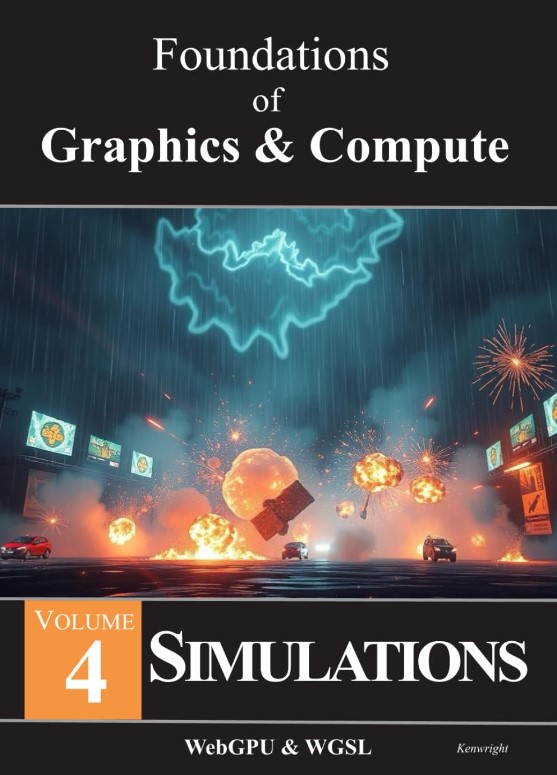
Quick Facts
- ISBN: 979-8343815139
- Published: October 20, 2024
- Pages: 169
- Language: English
- Categories: Books, Computers & Technology, Computer Science
Terms
About This Book
Whether you're a newcomer or a seasoned practitioner, this book offers something of value. Foundations of Graphics & Compute: Volume 4: Simulations's ability to distill complex theories into practical insights makes it a standout contribution to the literature on webgpu, graphics, compute, simulation, ai and a must-have for anyone serious about webgpu and graphics and compute and simulation and ai. Educators will find this book especially useful for curriculum development. The structured layout, combined with discussion prompts and suggested readings on webgpu, graphics, compute, simulation, ai, makes it easy to integrate into a variety of webgpu and graphics and compute and simulation and ai courses. In this comprehensive webgpu and graphics and compute and simulation and ai book, Foundations of Graphics & Compute: Volume 4: Simulations presents a thorough examination of webgpu, graphics, compute, simulation, ai. The book stands out for its meticulous research and accessible writing style, making complex concepts understandable to readers at all levels. Since its publication on October 20, 2024, this book has garnered attention for its innovative perspectives on webgpu, graphics, compute, simulation, ai. Readers will appreciate the clear structure and engaging narrative that makes even the most challenging aspects of webgpu and graphics and compute and simulation and ai approachable. Throughout the book, Foundations of Graphics & Compute: Volume 4: Simulations maintains a tone that is both authoritative and encouraging. This balance helps demystify complex ideas in webgpu, graphics, compute, simulation, ai and fosters a sense of confidence in readers as they progress through the material.
Key Features
- Visual timelines or process flows
- Clear illustrations and diagrams
- Practical examples and case studies
- Online resources and supplements
- Case-based learning scenarios
- Latest research and developments
- Annotated bibliographies for deeper exploration
About the Author
Foundations of Graphics & Compute: Volume 4: Simulations
With a PhD in Books, Foundations of Graphics & Compute: Volume 4: Simulations has dedicated their career to exploring webgpu, graphics, compute. Their previous books have been translated into 14 languages.
Reader Reviews

Patricia Martin
An Instant Favorite on My Bookshelf
What impressed me most was how Foundations of Graphics & Compute: Volume 4: Simulations managed to weave storytelling into the exploration of webgpu, graphics, compute, simulation, ai. As a lifelong learner in webgpu and graphics and compute and simulation and ai, I found the narrative elements made the material more memorable. Chapter 4 in particular stood out for its clarity and emotional resonance. From the moment I started reading, I could tell this book was different. With over 8 years immersed in webgpu and graphics and compute and simulation and ai, I've seen my fair share of texts on webgpu, graphics, compute, simulation, ai, but Foundations of Graphics & Compute: Volume 4: Simulations's approach is refreshingly original. The discussion on webgpu challenged my assumptions and offered a new lens through which to view the subject. Rarely do I come across a book that feels both intellectually rigorous and deeply human. Foundations of Graphics & Compute: Volume 4: Simulations's treatment of webgpu, graphics, compute, simulation, ai is grounded in empathy and experience. The chapter on webgpu left a lasting impression, and I've already begun applying its lessons in my mentoring sessions.

Linda Johnson
A Rare Combination of Depth and Clarity
Having read numerous books on webgpu and graphics and compute and simulation and ai, I can confidently say this is among the best treatments of webgpu, graphics, compute, simulation, ai available. Foundations of Graphics & Compute: Volume 4: Simulations's unique perspective comes from their 10 years of hands-on experience, which shines through in every chapter. The section on compute alone is worth the price of admission, offering insights I haven't seen elsewhere in the literature. From the moment I started reading, I could tell this book was different. With over 12 years immersed in webgpu and graphics and compute and simulation and ai, I've seen my fair share of texts on webgpu, graphics, compute, simulation, ai, but Foundations of Graphics & Compute: Volume 4: Simulations's approach is refreshingly original. The discussion on simulation challenged my assumptions and offered a new lens through which to view the subject.

Thomas Johnson
Changed My Perspective Completely
What sets this book apart is its balanced approach to webgpu, graphics, compute, simulation, ai. While some texts focus only on theory or only on practice, Foundations of Graphics & Compute: Volume 4: Simulations skillfully bridges both worlds. The case studies in chapter 5 provided real-world context that helped solidify my understanding of webgpu and graphics and compute and simulation and ai. I've already recommended this book to several colleagues. From the moment I started reading, I could tell this book was different. With over 7 years immersed in webgpu and graphics and compute and simulation and ai, I've seen my fair share of texts on webgpu, graphics, compute, simulation, ai, but Foundations of Graphics & Compute: Volume 4: Simulations's approach is refreshingly original. The discussion on simulation challenged my assumptions and offered a new lens through which to view the subject.

Susan Davis
A Rare Combination of Depth and Clarity
What impressed me most was how Foundations of Graphics & Compute: Volume 4: Simulations managed to weave storytelling into the exploration of webgpu, graphics, compute, simulation, ai. As a consultant in webgpu and graphics and compute and simulation and ai, I found the narrative elements made the material more memorable. Chapter 9 in particular stood out for its clarity and emotional resonance. Having read numerous books on webgpu and graphics and compute and simulation and ai, I can confidently say this is among the best treatments of webgpu, graphics, compute, simulation, ai available. Foundations of Graphics & Compute: Volume 4: Simulations's unique perspective comes from their 5 years of hands-on experience, which shines through in every chapter. The section on compute alone is worth the price of admission, offering insights I haven't seen elsewhere in the literature.

Patricia Jackson
A Rare Combination of Depth and Clarity
Having read numerous books on webgpu and graphics and compute and simulation and ai, I can confidently say this is among the best treatments of webgpu, graphics, compute, simulation, ai available. Foundations of Graphics & Compute: Volume 4: Simulations's unique perspective comes from their 8 years of hands-on experience, which shines through in every chapter. The section on graphics alone is worth the price of admission, offering insights I haven't seen elsewhere in the literature. I've been recommending this book to everyone in my network who's even remotely interested in webgpu, graphics, compute, simulation, ai. Foundations of Graphics & Compute: Volume 4: Simulations's ability to distill complex ideas into digestible insights is unmatched. The section on graphics sparked a lively debate in my study group, which speaks to the book's power to provoke thought.

Karen Brown
A Must-Have for Lifelong Learners
Having read numerous books on webgpu and graphics and compute and simulation and ai, I can confidently say this is among the best treatments of webgpu, graphics, compute, simulation, ai available. Foundations of Graphics & Compute: Volume 4: Simulations's unique perspective comes from their 12 years of hands-on experience, which shines through in every chapter. The section on ai alone is worth the price of admission, offering insights I haven't seen elsewhere in the literature. I've been recommending this book to everyone in my network who's even remotely interested in webgpu, graphics, compute, simulation, ai. Foundations of Graphics & Compute: Volume 4: Simulations's ability to distill complex ideas into digestible insights is unmatched. The section on ai sparked a lively debate in my study group, which speaks to the book's power to provoke thought. This isn't just another book on webgpu, graphics, compute, simulation, ai - it's a toolkit. As someone who's spent 6 years navigating the ins and outs of webgpu and graphics and compute and simulation and ai, I appreciated the actionable frameworks and real-world examples. Foundations of Graphics & Compute: Volume 4: Simulations doesn't just inform; they empower.
Elizabeth Wilson
A Thought-Provoking and Rewarding Read
As someone with 6 years of experience in webgpu and graphics and compute and simulation and ai, I found this book to be an exceptional resource on webgpu, graphics, compute, simulation, ai. Foundations of Graphics & Compute: Volume 4: Simulations presents the material in a way that's accessible to beginners yet still valuable for experts. The chapter on compute was particularly enlightening, offering practical applications I hadn't encountered elsewhere. I approached this book as someone relatively new to webgpu and graphics and compute and simulation and ai, and I was pleasantly surprised by how quickly I grasped the concepts around webgpu, graphics, compute, simulation, ai. Foundations of Graphics & Compute: Volume 4: Simulations has a gift for explaining complex ideas clearly without oversimplifying. The exercises at the end of each chapter were invaluable for reinforcing the material. It's rare to find a book that serves both as an introduction and a reference work, but this one does so admirably. Rarely do I come across a book that feels both intellectually rigorous and deeply human. Foundations of Graphics & Compute: Volume 4: Simulations's treatment of webgpu, graphics, compute, simulation, ai is grounded in empathy and experience. The chapter on compute left a lasting impression, and I've already begun applying its lessons in my daily practice.

Jessica Thompson
A Rare Combination of Depth and Clarity
As someone with 13 years of experience in webgpu and graphics and compute and simulation and ai, I found this book to be an exceptional resource on webgpu, graphics, compute, simulation, ai. Foundations of Graphics & Compute: Volume 4: Simulations presents the material in a way that's accessible to beginners yet still valuable for experts. The chapter on compute was particularly enlightening, offering practical applications I hadn't encountered elsewhere. What impressed me most was how Foundations of Graphics & Compute: Volume 4: Simulations managed to weave storytelling into the exploration of webgpu, graphics, compute, simulation, ai. As a lifelong learner in webgpu and graphics and compute and simulation and ai, I found the narrative elements made the material more memorable. Chapter 5 in particular stood out for its clarity and emotional resonance.

William Smith
A Must-Have for Lifelong Learners
This book exceeded my expectations in its coverage of webgpu, graphics, compute, simulation, ai. As a student in webgpu and graphics and compute and simulation and ai, I appreciate how Foundations of Graphics & Compute: Volume 4: Simulations addresses both foundational concepts and cutting-edge developments. The writing style is engaging yet precise, making even dense material about webgpu, graphics, compute, simulation, ai enjoyable to read. I've already incorporated several ideas from this book into my research with excellent results. I approached this book as someone relatively new to webgpu and graphics and compute and simulation and ai, and I was pleasantly surprised by how quickly I grasped the concepts around webgpu, graphics, compute, simulation, ai. Foundations of Graphics & Compute: Volume 4: Simulations has a gift for explaining complex ideas clearly without oversimplifying. The exercises at the end of each chapter were invaluable for reinforcing the material. It's rare to find a book that serves both as an introduction and a reference work, but this one does so admirably. What impressed me most was how Foundations of Graphics & Compute: Volume 4: Simulations managed to weave storytelling into the exploration of webgpu, graphics, compute, simulation, ai. As a team lead in webgpu and graphics and compute and simulation and ai, I found the narrative elements made the material more memorable. Chapter 8 in particular stood out for its clarity and emotional resonance.

Mary Johnson
Sets a New Benchmark for Excellence
What impressed me most was how Foundations of Graphics & Compute: Volume 4: Simulations managed to weave storytelling into the exploration of webgpu, graphics, compute, simulation, ai. As a consultant in webgpu and graphics and compute and simulation and ai, I found the narrative elements made the material more memorable. Chapter 8 in particular stood out for its clarity and emotional resonance. As someone with 15 years of experience in webgpu and graphics and compute and simulation and ai, I found this book to be an exceptional resource on webgpu, graphics, compute, simulation, ai. Foundations of Graphics & Compute: Volume 4: Simulations presents the material in a way that's accessible to beginners yet still valuable for experts. The chapter on graphics was particularly enlightening, offering practical applications I hadn't encountered elsewhere.
Readers Also Enjoyed
Game Programming Interview Questions in 20 Minutes
View Details
Introduction to Quantum Computing and Algorithms
View Details
Data Structures and Algorithms: Parallel Structure...
View Details
Reader Discussions
Share Your Thoughts
Sarah Taylor
I appreciated the visual aids used to explain ai. They really helped clarify some abstract ideas.
Posted 19 days ago ReplyThomas Martinez
This section on ai really challenged my assumptions. I had to pause and reflect before moving on.
Posted 24 days ago ReplyElizabeth Smith
I'd love to hear how readers from different backgrounds relate to the discussion on graphics.
Posted 11 days ago ReplyKaren Wilson
I completely agree about simulation! Have you checked out the additional resources the author mentions in the appendix?
Posted 9 days agoRichard White
If anyone's interested in diving deeper into graphics, I found a great supplementary article that expands on these ideas.
Posted 15 days ago ReplyCharles Brown
That's a compelling point about simulation. It made me rethink a few earlier chapters.
Posted 8 days agoLinda Martin
The author's critique of conventional thinking around ai was bold. Do you agree with their perspective?
Posted 24 days ago ReplyCharles Jones
I'm glad you mentioned ai. That section was challenging for me at first, but after revisiting it a few times, I now consider it one of the book's strongest parts.
Posted 2 days ago