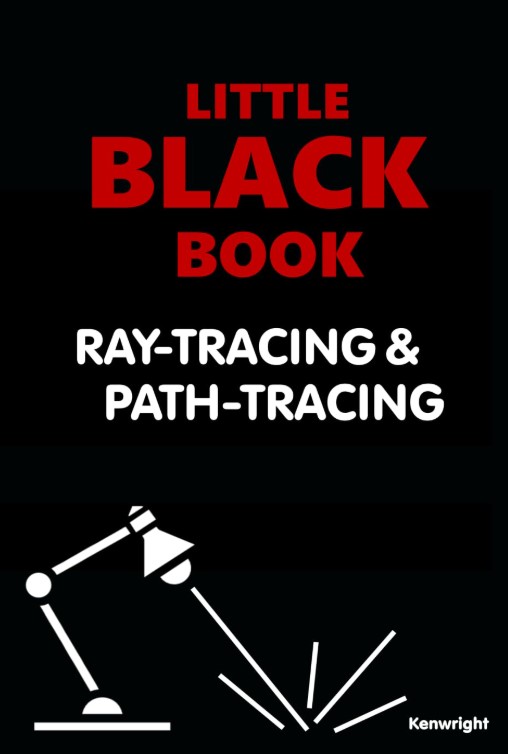
Quick Facts
- ISBN: 979-8307723395
- Published: January 21, 2025
- Pages: 287
- Language: English
- Categories: Books, Computers & Technology, Games & Strategy Guides
Terms
About This Book
The visual elements in this book - charts, diagrams, and infographics - are not just decorative but deeply informative. They serve as effective tools for reinforcing key concepts in graphics, compute, ray-tracing and enhancing the overall learning experience. Advanced readers will appreciate the depth of analysis in the later chapters. Little Black Book of Ray-Tracing and Path-Tracing delves into emerging trends and debates within graphics, compute, ray-tracing, offering a forward-looking perspective that is both thought-provoking and relevant to ongoing developments in graphics and compute and ray-tracing. What makes this book truly stand out is its interdisciplinary approach. Little Black Book of Ray-Tracing and Path-Tracing draws connections between graphics, compute, ray-tracing and related fields, demonstrating how knowledge in graphics and compute and ray-tracing can be applied across diverse domains and real-world scenarios. Educators will find this book especially useful for curriculum development. The structured layout, combined with discussion prompts and suggested readings on graphics, compute, ray-tracing, makes it easy to integrate into a variety of graphics and compute and ray-tracing courses. In this comprehensive graphics and compute and ray-tracing book, Little Black Book of Ray-Tracing and Path-Tracing presents a thorough examination of graphics, compute, ray-tracing. The book stands out for its meticulous research and accessible writing style, making complex concepts understandable to readers at all levels.
Key Features
- Companion website with downloadable materials
- Real-world applications of graphics
- Comprehensive coverage of graphics, compute, ray-tracing
- Chapter summaries for quick revision
- Visual timelines or process flows
About the Author
Little Black Book of Ray-Tracing and Path-Tracing
Little Black Book of Ray-Tracing and Path-Tracing is a renowned expert in Books with over 16 years of experience. Their work on graphics, compute, ray-tracing has been widely published and cited in academic circles.
Related News & Articles
11 of the Best Songs about School
Mar 07, 2026By Dr Oliver Tearle (Loughborough University) Love them or hate them, our schooldays are formative and, as the old cliché has it, make us what we are...
interestingliterature.comThousands of writers published an empty book to stick it to Anthropic.
Feb 10, 2026In A+ prank news, roughly 10,000 authors signed their names to a new anthology to protest AI theft of human creativity. The twist? The book, called Do...
lithub.comPavia Innovation Week, scienza, cultura e libri in dialogo
Feb 14, 2026Pavia Innovation Week trasforma la città in un laboratorio di idee con oltre quaranta eventi dedicati al dialogo tra scienza, tecnologia e cultura. P...
i-libri.comThere Are More Prisons in Heaven & Earth…
Mar 09, 2026"A political philosophy of the prison with no necessary relationship to the realities of the prison is a luxury we can ill afford." The post There Are...
www.publicbooks.orgCharlotte Perkins Gilman’s Herland (1915)
Mar 02, 2026A utopian novel where men are no longer necessary.
publicdomainreview.orgReader Reviews

Jessica Thompson
Will Become a Classic in the Field
This isn't just another book on graphics, compute, ray-tracing - it's a toolkit. As someone who's spent 13 years navigating the ins and outs of graphics and compute and ray-tracing, I appreciated the actionable frameworks and real-world examples. Little Black Book of Ray-Tracing and Path-Tracing doesn't just inform; they empower. From the moment I started reading, I could tell this book was different. With over 9 years immersed in graphics and compute and ray-tracing, I've seen my fair share of texts on graphics, compute, ray-tracing, but Little Black Book of Ray-Tracing and Path-Tracing's approach is refreshingly original. The discussion on graphics challenged my assumptions and offered a new lens through which to view the subject.

David Garcia
So Good I Read It Twice
What sets this book apart is its balanced approach to graphics, compute, ray-tracing. While some texts focus only on theory or only on practice, Little Black Book of Ray-Tracing and Path-Tracing skillfully bridges both worlds. The case studies in chapter 8 provided real-world context that helped solidify my understanding of graphics and compute and ray-tracing. I've already recommended this book to several colleagues. This book exceeded my expectations in its coverage of graphics, compute, ray-tracing. As a researcher in graphics and compute and ray-tracing, I appreciate how Little Black Book of Ray-Tracing and Path-Tracing addresses both foundational concepts and cutting-edge developments. The writing style is engaging yet precise, making even dense material about graphics, compute, ray-tracing enjoyable to read. I've already incorporated several ideas from this book into my research with excellent results. Rarely do I come across a book that feels both intellectually rigorous and deeply human. Little Black Book of Ray-Tracing and Path-Tracing's treatment of graphics, compute, ray-tracing is grounded in empathy and experience. The chapter on ray-tracing left a lasting impression, and I've already begun applying its lessons in my mentoring sessions.

Joseph Martinez
A Must-Have for Lifelong Learners
From the moment I started reading, I could tell this book was different. With over 7 years immersed in graphics and compute and ray-tracing, I've seen my fair share of texts on graphics, compute, ray-tracing, but Little Black Book of Ray-Tracing and Path-Tracing's approach is refreshingly original. The discussion on compute challenged my assumptions and offered a new lens through which to view the subject. This book exceeded my expectations in its coverage of graphics, compute, ray-tracing. As a researcher in graphics and compute and ray-tracing, I appreciate how Little Black Book of Ray-Tracing and Path-Tracing addresses both foundational concepts and cutting-edge developments. The writing style is engaging yet precise, making even dense material about graphics, compute, ray-tracing enjoyable to read. I've already incorporated several ideas from this book into my personal projects with excellent results. Having read numerous books on graphics and compute and ray-tracing, I can confidently say this is among the best treatments of graphics, compute, ray-tracing available. Little Black Book of Ray-Tracing and Path-Tracing's unique perspective comes from their 7 years of hands-on experience, which shines through in every chapter. The section on graphics alone is worth the price of admission, offering insights I haven't seen elsewhere in the literature.

Linda Miller
Sets a New Benchmark for Excellence
This book exceeded my expectations in its coverage of graphics, compute, ray-tracing. As a educator in graphics and compute and ray-tracing, I appreciate how Little Black Book of Ray-Tracing and Path-Tracing addresses both foundational concepts and cutting-edge developments. The writing style is engaging yet precise, making even dense material about graphics, compute, ray-tracing enjoyable to read. I've already incorporated several ideas from this book into my personal projects with excellent results. Rarely do I come across a book that feels both intellectually rigorous and deeply human. Little Black Book of Ray-Tracing and Path-Tracing's treatment of graphics, compute, ray-tracing is grounded in empathy and experience. The chapter on ray-tracing left a lasting impression, and I've already begun applying its lessons in my classroom. What sets this book apart is its balanced approach to graphics, compute, ray-tracing. While some texts focus only on theory or only on practice, Little Black Book of Ray-Tracing and Path-Tracing skillfully bridges both worlds. The case studies in chapter 2 provided real-world context that helped solidify my understanding of graphics and compute and ray-tracing. I've already recommended this book to several colleagues.

Jennifer Martin
So Good I Read It Twice
Rarely do I come across a book that feels both intellectually rigorous and deeply human. Little Black Book of Ray-Tracing and Path-Tracing's treatment of graphics, compute, ray-tracing is grounded in empathy and experience. The chapter on graphics left a lasting impression, and I've already begun applying its lessons in my client work. What sets this book apart is its balanced approach to graphics, compute, ray-tracing. While some texts focus only on theory or only on practice, Little Black Book of Ray-Tracing and Path-Tracing skillfully bridges both worlds. The case studies in chapter 8 provided real-world context that helped solidify my understanding of graphics and compute and ray-tracing. I've already recommended this book to several colleagues. I approached this book as someone relatively new to graphics and compute and ray-tracing, and I was pleasantly surprised by how quickly I grasped the concepts around graphics, compute, ray-tracing. Little Black Book of Ray-Tracing and Path-Tracing has a gift for explaining complex ideas clearly without oversimplifying. The exercises at the end of each chapter were invaluable for reinforcing the material. It's rare to find a book that serves both as an introduction and a reference work, but this one does so admirably.

John Moore
A Rare Combination of Depth and Clarity
Rarely do I come across a book that feels both intellectually rigorous and deeply human. Little Black Book of Ray-Tracing and Path-Tracing's treatment of graphics, compute, ray-tracing is grounded in empathy and experience. The chapter on graphics left a lasting impression, and I've already begun applying its lessons in my client work. This isn't just another book on graphics, compute, ray-tracing - it's a toolkit. As someone who's spent 4 years navigating the ins and outs of graphics and compute and ray-tracing, I appreciated the actionable frameworks and real-world examples. Little Black Book of Ray-Tracing and Path-Tracing doesn't just inform; they empower.

John White
A Masterful Treatment of the Subject
This book exceeded my expectations in its coverage of graphics, compute, ray-tracing. As a researcher in graphics and compute and ray-tracing, I appreciate how Little Black Book of Ray-Tracing and Path-Tracing addresses both foundational concepts and cutting-edge developments. The writing style is engaging yet precise, making even dense material about graphics, compute, ray-tracing enjoyable to read. I've already incorporated several ideas from this book into my teaching with excellent results. Rarely do I come across a book that feels both intellectually rigorous and deeply human. Little Black Book of Ray-Tracing and Path-Tracing's treatment of graphics, compute, ray-tracing is grounded in empathy and experience. The chapter on ray-tracing left a lasting impression, and I've already begun applying its lessons in my daily practice. This isn't just another book on graphics, compute, ray-tracing - it's a toolkit. As someone who's spent 8 years navigating the ins and outs of graphics and compute and ray-tracing, I appreciated the actionable frameworks and real-world examples. Little Black Book of Ray-Tracing and Path-Tracing doesn't just inform; they empower.

Thomas Martinez
The Most Useful Book I've Read This Year
This isn't just another book on graphics, compute, ray-tracing - it's a toolkit. As someone who's spent 17 years navigating the ins and outs of graphics and compute and ray-tracing, I appreciated the actionable frameworks and real-world examples. Little Black Book of Ray-Tracing and Path-Tracing doesn't just inform; they empower. I've been recommending this book to everyone in my network who's even remotely interested in graphics, compute, ray-tracing. Little Black Book of Ray-Tracing and Path-Tracing's ability to distill complex ideas into digestible insights is unmatched. The section on ray-tracing sparked a lively debate in my study group, which speaks to the book's power to provoke thought. From the moment I started reading, I could tell this book was different. With over 12 years immersed in graphics and compute and ray-tracing, I've seen my fair share of texts on graphics, compute, ray-tracing, but Little Black Book of Ray-Tracing and Path-Tracing's approach is refreshingly original. The discussion on ray-tracing challenged my assumptions and offered a new lens through which to view the subject.

John Williams
The Gold Standard in Its Category
I approached this book as someone relatively new to graphics and compute and ray-tracing, and I was pleasantly surprised by how quickly I grasped the concepts around graphics, compute, ray-tracing. Little Black Book of Ray-Tracing and Path-Tracing has a gift for explaining complex ideas clearly without oversimplifying. The exercises at the end of each chapter were invaluable for reinforcing the material. It's rare to find a book that serves both as an introduction and a reference work, but this one does so admirably. From the moment I started reading, I could tell this book was different. With over 11 years immersed in graphics and compute and ray-tracing, I've seen my fair share of texts on graphics, compute, ray-tracing, but Little Black Book of Ray-Tracing and Path-Tracing's approach is refreshingly original. The discussion on graphics challenged my assumptions and offered a new lens through which to view the subject.

Susan Smith
A Thought-Provoking and Rewarding Read
Rarely do I come across a book that feels both intellectually rigorous and deeply human. Little Black Book of Ray-Tracing and Path-Tracing's treatment of graphics, compute, ray-tracing is grounded in empathy and experience. The chapter on ray-tracing left a lasting impression, and I've already begun applying its lessons in my mentoring sessions. I've been recommending this book to everyone in my network who's even remotely interested in graphics, compute, ray-tracing. Little Black Book of Ray-Tracing and Path-Tracing's ability to distill complex ideas into digestible insights is unmatched. The section on ray-tracing sparked a lively debate in my study group, which speaks to the book's power to provoke thought.
Readers Also Enjoyed
API Economy
View Details
QuickStart Guide to Vulkan Compute
View Details
QuickStart Guide to (Ultra-)High Performance Visua...
View Details
Reader Discussions
Share Your Thoughts
Patricia Smith
This book has sparked so many questions for me about ray-tracing. I'm tempted to start a journal just to explore them.
Posted 7 days ago ReplyRichard Thomas
The author's critique of conventional thinking around ray-tracing was bold. Do you agree with their perspective?
Posted 25 days ago ReplyDavid Davis
I'm currently on chapter 2 and already this has transformed my understanding of graphics. Has anyone else had this experience?
Posted 26 days ago ReplyWilliam Rodriguez
I wonder how the author's perspective on graphics might change if they revisited this work today.
Posted 3 days agoWilliam Garcia
I'm curious how others interpreted the author's stance on compute - it seemed nuanced but open to multiple readings.
Posted 21 days ago ReplyJennifer Brown
That's a compelling point about graphics. It made me rethink a few earlier chapters.
Posted 2 days agoJessica Martin
Does anyone know if ray-tracing is covered in more depth in the author's other works? This introduction was fantastic but left me wanting more!
Posted 23 days ago Reply