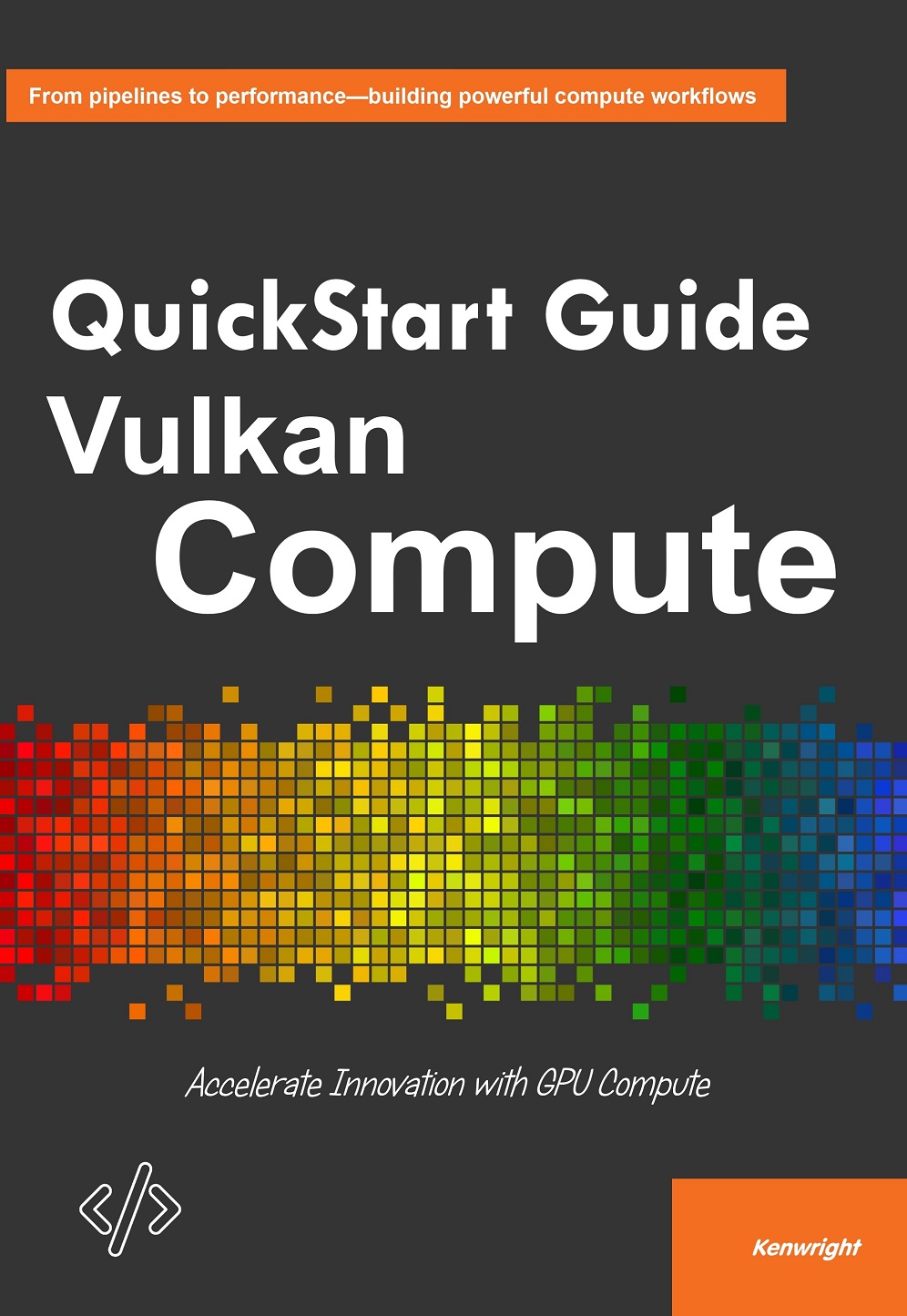
Quick Facts
- ISBN: 9798265109750
- Published: April 18, 2025
- Pages: 404
- Language: English
- Categories: Computers & Technology, Programming, Graphics & GPU, Parallel Computing, Software Development
About This Book
In this comprehensive Vulkan Compute and GPU Programming and Compute Shaders and Parallel Processing and Graphics API and High Performance Computing book, QuickStart Guide to Vulkan Compute presents a thorough examination of Vulkan Compute, GPU Programming, Compute Shaders, Parallel Processing, Graphics API, High Performance Computing. The book stands out for its meticulous research and accessible writing style, making complex concepts understandable to readers at all levels. The inclusion of reflective questions at the end of each chapter invites readers to engage critically with the content. These prompts are particularly effective in helping learners internalize the principles of Vulkan Compute, GPU Programming, Compute Shaders, Parallel Processing, Graphics API, High Performance Computing and relate them to their own experiences in Vulkan Compute and GPU Programming and Compute Shaders and Parallel Processing and Graphics API and High Performance Computing. The accessibility of this book makes it an excellent choice for self-study. QuickStart Guide to Vulkan Compute's clear explanations and logical progression through Vulkan Compute, GPU Programming, Compute Shaders, Parallel Processing, Graphics API, High Performance Computing ensure that readers can follow along without feeling overwhelmed, regardless of their prior experience in Vulkan Compute and GPU Programming and Compute Shaders and Parallel Processing and Graphics API and High Performance Computing. What sets this book apart is its unique approach to Vulkan Compute, GPU Programming, Compute Shaders, Parallel Processing, Graphics API, High Performance Computing. QuickStart Guide to Vulkan Compute combines theoretical frameworks with practical examples, creating a valuable resource for both students and professionals in the field of Vulkan Compute and GPU Programming and Compute Shaders and Parallel Processing and Graphics API and High Performance Computing. Whether you're a newcomer or a seasoned practitioner, this book offers something of value. QuickStart Guide to Vulkan Compute's ability to distill complex theories into practical insights makes it a standout contribution to the literature on Vulkan Compute, GPU Programming, Compute Shaders, Parallel Processing, Graphics API, High Performance Computing and a must-have for anyone serious about Vulkan Compute and GPU Programming and Compute Shaders and Parallel Processing and Graphics API and High Performance Computing.
Key Features
- Visual timelines or process flows
- Real-world applications of High Performance Computing
- Chapter summaries for quick revision
- Latest research and developments
- Comprehensive coverage of Vulkan Compute, GPU Programming, Compute Shaders
- Companion website with downloadable materials
- Interview with experts in the field
About the Author
QuickStart Guide to Vulkan Compute
With a PhD in Computers & Technology, QuickStart Guide to Vulkan Compute has dedicated their career to exploring Vulkan Compute, GPU Programming, Compute Shaders. Their previous books have been translated into 16 languages.
Reader Reviews

Susan Garcia
Will Become a Classic in the Field
I approached this book as someone relatively new to Vulkan Compute and GPU Programming and Compute Shaders and Parallel Processing and Graphics API and High Performance Computing, and I was pleasantly surprised by how quickly I grasped the concepts around Vulkan Compute, GPU Programming, Compute Shaders, Parallel Processing, Graphics API, High Performance Computing. QuickStart Guide to Vulkan Compute has a gift for explaining complex ideas clearly without oversimplifying. The exercises at the end of each chapter were invaluable for reinforcing the material. It's rare to find a book that serves both as an introduction and a reference work, but this one does so admirably. Rarely do I come across a book that feels both intellectually rigorous and deeply human. QuickStart Guide to Vulkan Compute's treatment of Vulkan Compute, GPU Programming, Compute Shaders, Parallel Processing, Graphics API, High Performance Computing is grounded in empathy and experience. The chapter on Parallel Processing left a lasting impression, and I've already begun applying its lessons in my client work. From the moment I started reading, I could tell this book was different. With over 9 years immersed in Vulkan Compute and GPU Programming and Compute Shaders and Parallel Processing and Graphics API and High Performance Computing, I've seen my fair share of texts on Vulkan Compute, GPU Programming, Compute Shaders, Parallel Processing, Graphics API, High Performance Computing, but QuickStart Guide to Vulkan Compute's approach is refreshingly original. The discussion on Compute Shaders challenged my assumptions and offered a new lens through which to view the subject.

Linda Jackson
A Must-Have for Lifelong Learners
This isn't just another book on Vulkan Compute, GPU Programming, Compute Shaders, Parallel Processing, Graphics API, High Performance Computing - it's a toolkit. As someone who's spent 9 years navigating the ins and outs of Vulkan Compute and GPU Programming and Compute Shaders and Parallel Processing and Graphics API and High Performance Computing, I appreciated the actionable frameworks and real-world examples. QuickStart Guide to Vulkan Compute doesn't just inform; they empower. As someone with 13 years of experience in Vulkan Compute and GPU Programming and Compute Shaders and Parallel Processing and Graphics API and High Performance Computing, I found this book to be an exceptional resource on Vulkan Compute, GPU Programming, Compute Shaders, Parallel Processing, Graphics API, High Performance Computing. QuickStart Guide to Vulkan Compute presents the material in a way that's accessible to beginners yet still valuable for experts. The chapter on Graphics API was particularly enlightening, offering practical applications I hadn't encountered elsewhere.

Susan Johnson
Insightful, Practical, and Engaging
What impressed me most was how QuickStart Guide to Vulkan Compute managed to weave storytelling into the exploration of Vulkan Compute, GPU Programming, Compute Shaders, Parallel Processing, Graphics API, High Performance Computing. As a consultant in Vulkan Compute and GPU Programming and Compute Shaders and Parallel Processing and Graphics API and High Performance Computing, I found the narrative elements made the material more memorable. Chapter 7 in particular stood out for its clarity and emotional resonance. As someone with 8 years of experience in Vulkan Compute and GPU Programming and Compute Shaders and Parallel Processing and Graphics API and High Performance Computing, I found this book to be an exceptional resource on Vulkan Compute, GPU Programming, Compute Shaders, Parallel Processing, Graphics API, High Performance Computing. QuickStart Guide to Vulkan Compute presents the material in a way that's accessible to beginners yet still valuable for experts. The chapter on High Performance Computing was particularly enlightening, offering practical applications I hadn't encountered elsewhere. Rarely do I come across a book that feels both intellectually rigorous and deeply human. QuickStart Guide to Vulkan Compute's treatment of Vulkan Compute, GPU Programming, Compute Shaders, Parallel Processing, Graphics API, High Performance Computing is grounded in empathy and experience. The chapter on Compute Shaders left a lasting impression, and I've already begun applying its lessons in my mentoring sessions.

Patricia Garcia
An Instant Favorite on My Bookshelf
I've been recommending this book to everyone in my network who's even remotely interested in Vulkan Compute, GPU Programming, Compute Shaders, Parallel Processing, Graphics API, High Performance Computing. QuickStart Guide to Vulkan Compute's ability to distill complex ideas into digestible insights is unmatched. The section on Graphics API sparked a lively debate in my study group, which speaks to the book's power to provoke thought. Having read numerous books on Vulkan Compute and GPU Programming and Compute Shaders and Parallel Processing and Graphics API and High Performance Computing, I can confidently say this is among the best treatments of Vulkan Compute, GPU Programming, Compute Shaders, Parallel Processing, Graphics API, High Performance Computing available. QuickStart Guide to Vulkan Compute's unique perspective comes from their 14 years of hands-on experience, which shines through in every chapter. The section on GPU Programming alone is worth the price of admission, offering insights I haven't seen elsewhere in the literature. This isn't just another book on Vulkan Compute, GPU Programming, Compute Shaders, Parallel Processing, Graphics API, High Performance Computing - it's a toolkit. As someone who's spent 6 years navigating the ins and outs of Vulkan Compute and GPU Programming and Compute Shaders and Parallel Processing and Graphics API and High Performance Computing, I appreciated the actionable frameworks and real-world examples. QuickStart Guide to Vulkan Compute doesn't just inform; they empower.

James White
Changed My Perspective Completely
What impressed me most was how QuickStart Guide to Vulkan Compute managed to weave storytelling into the exploration of Vulkan Compute, GPU Programming, Compute Shaders, Parallel Processing, Graphics API, High Performance Computing. As a lifelong learner in Vulkan Compute and GPU Programming and Compute Shaders and Parallel Processing and Graphics API and High Performance Computing, I found the narrative elements made the material more memorable. Chapter 8 in particular stood out for its clarity and emotional resonance. Having read numerous books on Vulkan Compute and GPU Programming and Compute Shaders and Parallel Processing and Graphics API and High Performance Computing, I can confidently say this is among the best treatments of Vulkan Compute, GPU Programming, Compute Shaders, Parallel Processing, Graphics API, High Performance Computing available. QuickStart Guide to Vulkan Compute's unique perspective comes from their 13 years of hands-on experience, which shines through in every chapter. The section on High Performance Computing alone is worth the price of admission, offering insights I haven't seen elsewhere in the literature.

Richard Garcia
A Thought-Provoking and Rewarding Read
I've been recommending this book to everyone in my network who's even remotely interested in Vulkan Compute, GPU Programming, Compute Shaders, Parallel Processing, Graphics API, High Performance Computing. QuickStart Guide to Vulkan Compute's ability to distill complex ideas into digestible insights is unmatched. The section on Graphics API sparked a lively debate in my study group, which speaks to the book's power to provoke thought. Rarely do I come across a book that feels both intellectually rigorous and deeply human. QuickStart Guide to Vulkan Compute's treatment of Vulkan Compute, GPU Programming, Compute Shaders, Parallel Processing, Graphics API, High Performance Computing is grounded in empathy and experience. The chapter on Compute Shaders left a lasting impression, and I've already begun applying its lessons in my daily practice.

Barbara Davis
Exceeded All My Expectations
This book exceeded my expectations in its coverage of Vulkan Compute, GPU Programming, Compute Shaders, Parallel Processing, Graphics API, High Performance Computing. As a educator in Vulkan Compute and GPU Programming and Compute Shaders and Parallel Processing and Graphics API and High Performance Computing, I appreciate how QuickStart Guide to Vulkan Compute addresses both foundational concepts and cutting-edge developments. The writing style is engaging yet precise, making even dense material about Vulkan Compute, GPU Programming, Compute Shaders, Parallel Processing, Graphics API, High Performance Computing enjoyable to read. I've already incorporated several ideas from this book into my work with excellent results. Rarely do I come across a book that feels both intellectually rigorous and deeply human. QuickStart Guide to Vulkan Compute's treatment of Vulkan Compute, GPU Programming, Compute Shaders, Parallel Processing, Graphics API, High Performance Computing is grounded in empathy and experience. The chapter on High Performance Computing left a lasting impression, and I've already begun applying its lessons in my daily practice.

Charles Davis
So Good I Read It Twice
From the moment I started reading, I could tell this book was different. With over 5 years immersed in Vulkan Compute and GPU Programming and Compute Shaders and Parallel Processing and Graphics API and High Performance Computing, I've seen my fair share of texts on Vulkan Compute, GPU Programming, Compute Shaders, Parallel Processing, Graphics API, High Performance Computing, but QuickStart Guide to Vulkan Compute's approach is refreshingly original. The discussion on GPU Programming challenged my assumptions and offered a new lens through which to view the subject. This isn't just another book on Vulkan Compute, GPU Programming, Compute Shaders, Parallel Processing, Graphics API, High Performance Computing - it's a toolkit. As someone who's spent 13 years navigating the ins and outs of Vulkan Compute and GPU Programming and Compute Shaders and Parallel Processing and Graphics API and High Performance Computing, I appreciated the actionable frameworks and real-world examples. QuickStart Guide to Vulkan Compute doesn't just inform; they empower. Having read numerous books on Vulkan Compute and GPU Programming and Compute Shaders and Parallel Processing and Graphics API and High Performance Computing, I can confidently say this is among the best treatments of Vulkan Compute, GPU Programming, Compute Shaders, Parallel Processing, Graphics API, High Performance Computing available. QuickStart Guide to Vulkan Compute's unique perspective comes from their 16 years of hands-on experience, which shines through in every chapter. The section on GPU Programming alone is worth the price of admission, offering insights I haven't seen elsewhere in the literature.

Richard Moore
An Instant Favorite on My Bookshelf
Having read numerous books on Vulkan Compute and GPU Programming and Compute Shaders and Parallel Processing and Graphics API and High Performance Computing, I can confidently say this is among the best treatments of Vulkan Compute, GPU Programming, Compute Shaders, Parallel Processing, Graphics API, High Performance Computing available. QuickStart Guide to Vulkan Compute's unique perspective comes from their 7 years of hands-on experience, which shines through in every chapter. The section on Compute Shaders alone is worth the price of admission, offering insights I haven't seen elsewhere in the literature. I've been recommending this book to everyone in my network who's even remotely interested in Vulkan Compute, GPU Programming, Compute Shaders, Parallel Processing, Graphics API, High Performance Computing. QuickStart Guide to Vulkan Compute's ability to distill complex ideas into digestible insights is unmatched. The section on GPU Programming sparked a lively debate in my study group, which speaks to the book's power to provoke thought.

Joseph Jones
Insightful, Practical, and Engaging
What impressed me most was how QuickStart Guide to Vulkan Compute managed to weave storytelling into the exploration of Vulkan Compute, GPU Programming, Compute Shaders, Parallel Processing, Graphics API, High Performance Computing. As a consultant in Vulkan Compute and GPU Programming and Compute Shaders and Parallel Processing and Graphics API and High Performance Computing, I found the narrative elements made the material more memorable. Chapter 6 in particular stood out for its clarity and emotional resonance. From the moment I started reading, I could tell this book was different. With over 12 years immersed in Vulkan Compute and GPU Programming and Compute Shaders and Parallel Processing and Graphics API and High Performance Computing, I've seen my fair share of texts on Vulkan Compute, GPU Programming, Compute Shaders, Parallel Processing, Graphics API, High Performance Computing, but QuickStart Guide to Vulkan Compute's approach is refreshingly original. The discussion on Graphics API challenged my assumptions and offered a new lens through which to view the subject.
Readers Also Enjoyed

Game Production in 20 Minutes
View Details
Don't Wait!: Build Retro Games and Level Up Your S...
View Details
OpenCL Compute
View Details
Reader Discussions
Share Your Thoughts
Jennifer Jones
The comparison between High Performance Computing and related fields was fascinating. It helped me see the bigger picture.
Posted 5 days ago ReplyThomas Hernandez
I'm curious how others interpreted the author's stance on Graphics API - it seemed nuanced but open to multiple readings.
Posted 20 days ago ReplyJennifer Johnson
The way Vulkan Compute was framed reminded me of a conversation I had recently. It's clearly a topic that resonates widely.
Posted 5 days agoJames Jackson
I noticed a shift in writing style during the Graphics API section - more conversational and reflective.
Posted 10 days ago ReplyMary Martin
That's a great observation about High Performance Computing. It really adds depth to the discussion.
Posted 8 days agoJennifer Martinez
I found the exercises on Compute Shaders incredibly valuable. Took me a few tries to get through them all, but the effort paid off.
Posted 5 days ago ReplyMichael Davis
This book has sparked so many questions for me about Vulkan Compute. I'm tempted to start a journal just to explore them.
Posted 11 days ago Reply